
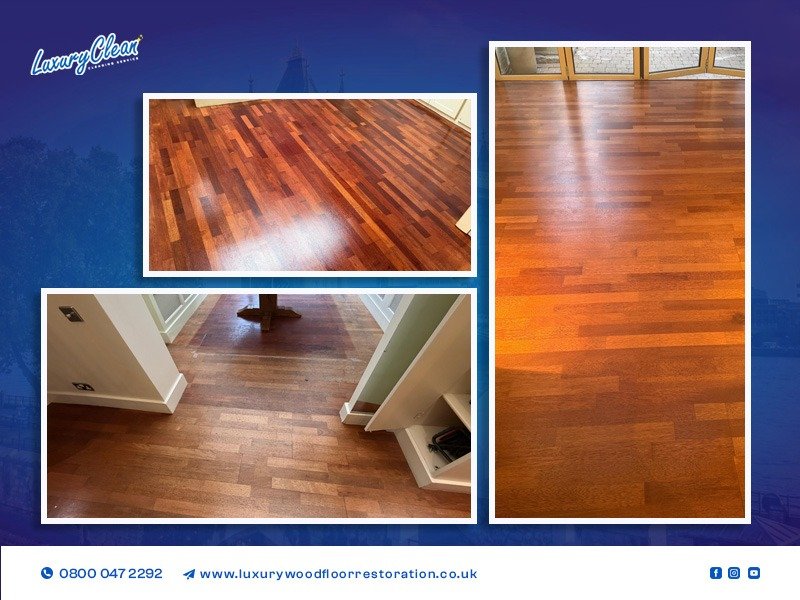
The difference between a floor that still feels original and one that feels tired often comes down to the finish. If you are weighing hardwood refinishing in Chelsea against full replacement, the real question is not whether the boards look old. The question is whether the wood still has enough life left to justify a controlled refinish rather than a heavier intervention.
Why Refinishing Matters More Than Replacement for Heritage Floors
Heritage floors carry more than surface wear. They hold the grain, board width, and texture that give an older room its character. Replacement strips all of that away and replaces it with something newer, flatter, and usually less convincing.
Refinishing keeps the original material in place. It resets the surface, restores the sheen, and protects the timber without erasing the patina that gives the floor its age. In a period property, that matters because the floor is part of the room’s identity, not just part of the flooring.
Early Signs Your Floor Needs Refinishing (Not Repair Yet)
The first warning sign is a finish that looks flat even after cleaning. Light catches the same patchiness every day, and the room starts to look drained rather than dirty.
A second sign is surface wear that stays shallow. Scuffs, fine scratches, and dull walkways sit in the top layer, while the boards below remain firm and level. A search for hardwood refinishing in Surrey usually starts here, when the floor looks worn, but the timber itself still feels sound.
Discolouration also tells you a lot. Sunlight fades one zone faster than another, and foot traffic wears the coating in the centre of the room. When the top layer has failed, but the wood still holds its shape, refinishing is the right level of intervention.
What Happens When You Delay Refinishing
A worn finish no longer protects timber. When raw wood shows moisture, dirt, and surface abrasion, it increases wear.
Delay also pushes the job from light surface work into heavier sanding. That means more material comes off later, which reduces the number of future refinish cycles the floor can handle. A homeowner looking at hardwood repair in Kent often discovers the real issue was not broken timber at all, but a finish left too long in service.
The biggest loss is visual. The floor stops ageing gracefully and starts looking neglected, which changes how the whole room feels.
What Hardwood Refinishing Actually Does
Refinishing removes the worn top layer, leaving the core wood intact. It smooths light imperfections, evens out the surface, and lays down a fresh coat that protects the grain from daily wear.
It also restores visual consistency. Older floors rarely fail in one neat way; one board looks lighter, another looks duller, and traffic paths show up as pale lanes. Refinishing pulls those clues back into one uniform surface, so the room reads as cared for rather than patched.
A short proof moment helps here: if the floor is still flat underfoot, but the finish looks tired across most of the room, refinishing usually gives you the best return for the least disruption.
Refinishing Methods: Which One Does Your Floor Need?
This is the one practical decision point. If the wear sits mostly in the finish and you need the room back with the least downtime, screen and recoat fits best. If the floor shows deeper scratches, uneven sheen across large areas, and more visible surface damage, full sanding and refinishing is the better path, even though it takes longer.
The difference comes down to disruption. A light recoat keeps more of the original surface and moves faster. Full sanding takes more time, more prep, and more drying, but it gives the floor a cleaner reset when the wear has gone deeper into the wood.
How Hardwood Refinishing in Chelsea Protects Heritage Value
Older floors need a careful hand because their value lies in the material itself. A good hardwood refinishing job in Chelsea respects the board thickness, the grain, and the room’s original feel, rather than sanding away what makes the floor special.
The work also depends on the right finish match. A period oak floor and a painted Victorian room do not want the same sheen or colour depth. A specialist reads the floor first, then sets the process around the timber rather than around a standard product. That is why people who start with hardwood refinishing in Chelsea often continue refinishing after they see how much of the original surface can be preserved.
Refinish While You Still Can
Heritage floors have a short window for renewal. Once the wear passes the surface, restoration gets harder and more invasive.
Act now, if your heritage floor still feels solid and most wear is in the finish, refinishing is your best move. Request an assessment before minor wear becomes major damage.