
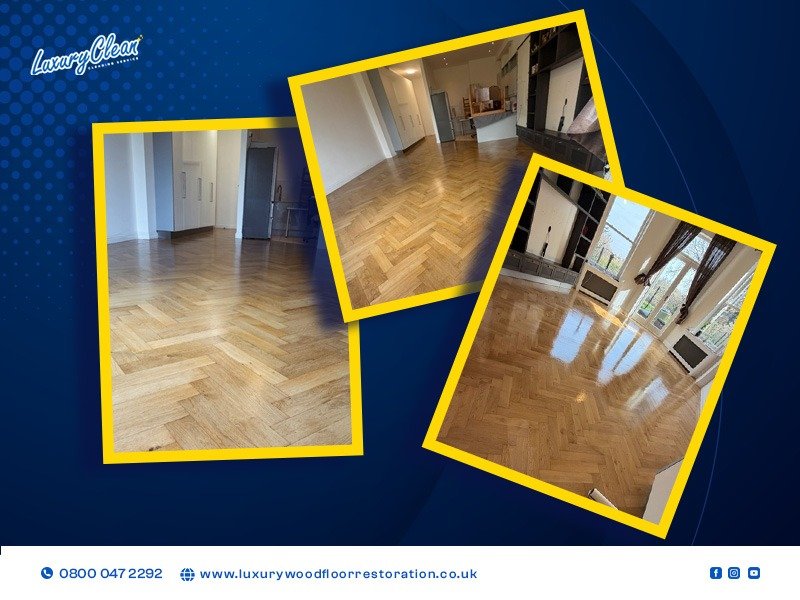
I once walked into a home where the floors looked beautiful from the doorway. The boards had a soft sheen under the afternoon light.
Then the homeowner bent down and lifted a corner of the finish with her fingernail.
A floor can look perfect on day one and still be headed for failure. The shine does not tell you whether the stain cured, and the smooth surface does not prove that moisture stayed out. The final coat does not reveal whether the sanding sequence was rushed.
Hardwood refinishing depends on chemistry, physics, timing, and restraint. People usually blame the polyurethane when a floor peels, scratches, clouds, or wears out within a year. Most of the time, the underlying process of hardwood refinishing failed first.
Skipping Intermediate Sandpaper Grits Leaves Invisible Barriers to Adhesion
Sanding builds a surface that the next layer can grip.
When someone jumps from a coarse grit straight to a fine grit, the floor may look smooth while deep scratches or packed-in old finish remain below the surface. Those hidden spots keep the next coat from bonding.
Why Perimeter Edges and Corners Fail Months Before the Centre of the Room
Big machines cut open floor areas well. Edges and corners of your floor are harder to reach to remove the old finish.
Along baseboards, under toe kicks, near closets, and around tight corners, old finish often remains. If edging is rushed, the new coating bridges over contaminated or poorly sanded wood.
Cleaning, furniture movement, pets, and seasonal expansion expose the weak bond.
A good hardwood restoration job should not have one standard for the middle of the room and another for the edges. If the edges are left dirty or sealed over the old finish, failure starts there first.
Trapping Ambient Moisture Underneath a New Polyurethane Seal
Wood absorbs moisture, releases moisture, and reacts to the room.
When the finish is applied while the wood is holding too much moisture, the coating can trap that moisture underneath. As the wood tries to release it later, pressure builds below the film. The result may be cloudy patches, peeling, cupping, or a finish that scratches too easily.
Humidity readings and moisture checks keep the coating from being sealed over unstable wood.
A floor refinished during a humid week may behave differently from a floor coated during a dry week. Recent mopping, wet basements, and rainy weather can all change the application environment.
Polyurethane needs the right environment to form a stable wear layer. If the room is too damp, drying slows down. Uneven curing can create tension inside the finish system. The floor may wait until winter heat dries the house, or summer humidity pushes moisture back into the boards, before the weak spots show.
Applying Water-Based Topcoats Over Uncured Oil Stains
Oil stain needs real cure time, not just enough time to feel dry.
A water-based topcoat can fail when it is applied over an oil stain that has not finished releasing solvents. The colour looks rich, the surface feels ready, and everyone wants the house back together.
Then the chemistry of the material objects.
The Chemical Rejection That Causes the Final Finish to Peel Off in Sheets
Water and uncured oil do not make a dependable bond. If solvents are still active in the stain, the topcoat can fail to attach to the layer below it.
When this happens, the finish may peel in sheets.
That kind of failure often shocks homeowners because the coating looked clean and professional when it was applied. The bond may have been weak from the first hour, and daily use simply exposed it.
Dry time is a necessary chemical requirement. Rush that part of the process, and the final coat may never attach.
Confusing a “Dry” Floor With a “Fully Cured” Floor
A floor can be dry enough to walk on and still not be ready for normal life.
Dry means the surface can be touched without leaving a mark. Cured means the coating has hardened enough to handle weight, friction, cleaning, and covered airflow.
Why Heavy Furniture Feet Gouge a Surface That Feels Perfectly Dry to the Touch
Heavy furniture concentrates weight into small contact points. Piano casters can press into a finish before it reaches full hardness.
The homeowner sees a surface that feels dry and assumes the room is ready. Then the furniture goes back. A week later, there are dents, drag marks, or dull pressure spots.
This is why professional crews give instructions about furniture, shoes, pets, and cleaning after hardwood refinishing. Follow them, and the coating gets time to harden before it has to carry weight.
Melting the Fresh Wear Layer With Improper Daily Maintenance
A fresh finish can still be damaged by the wrong cleaning routine after the last coat dries.
Many good floors are quietly ruined by products that promise shine, steam, or “deep cleaning.”
The Immediate Structural Damage Caused by Injecting Steam Into Microscopic Wood Seams
Steam drives heat and moisture into seams, checks, end joints, and tiny cracks in the finish. Even if the surface looks sealed, no wood floor is a single sheet of plastic.
On a fresh finish, heat can soften the wear layer. Moisture can reach vulnerable seams. Repeated use can cause whitening, raised grain, edge damage, and finish separation.
Many store-bought shine products leave acrylic, waxy, or oily residues. These products can make a floor look brighter for a short time, but they often interfere with the polyurethane surface.
They attract soil. They create dull buildup. They can make future recoating difficult because the new finish will not bond through the residue.
Good hardwood restoration rewards clean sanding, correct grit progression, moisture control, compatible products, full cure time, and careful maintenance.